
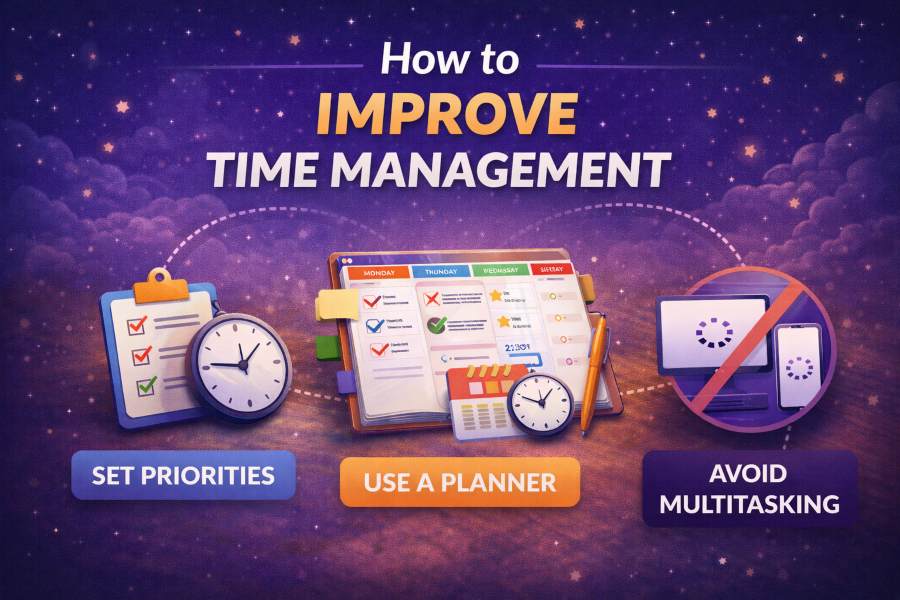
Time management is a crucial skill that can significantly enhance your productivity, reduce stress, and allow you to make the most out of each day. With numerous demands on your time, finding ways to efficiently prioritize and plan tasks becomes essential. This article provides effective time management strategies that you can implement right away, helping you stay organized and focused.
Set Clear and Achievable Goals
The first step to effective time management is setting clear and achievable goals. Whether you’re working on personal projects or professional tasks, it’s important to define what you need to accomplish. Break large tasks into smaller, manageable steps to avoid feeling overwhelmed.
A powerful method to structure your goals is the SMART framework: Specific, Measurable, Achievable, Relevant, and Time-bound. By aligning your goals with this method, you’ll have a clear path toward achieving them.
To track your progress, consider using a minutes to hours online converter to help convert and calculate the time you’ve allocated for each task. This can help you stay on track and make adjustments as necessary.
Prioritize Your Tasks
Not all tasks are created equal. Some require immediate attention, while others can wait. Prioritizing tasks based on their importance and urgency ensures that you focus your energy where it matters most.
One effective way to prioritize is by using the Eisenhower Matrix. This technique divides tasks into four quadrants:
- Urgent and important: Do these immediately.
- Important but not urgent: Schedule these tasks.
- Urgent but not important: Delegate if possible.
- Neither urgent nor important: Consider eliminating these tasks.
By evaluating your tasks in this way, you can streamline your day and avoid wasting time on low-priority activities.
Break Tasks into Smaller, Manageable Steps
Breaking down tasks into smaller, actionable steps can make them feel less daunting and easier to start. Rather than viewing a large project as a whole, divide it into specific, achievable tasks that you can tackle one by one.
This approach will keep you motivated, and as you complete each step, you’ll feel a sense of accomplishment, boosting your momentum. When you break large tasks down, you also gain a better understanding of the time required to complete each part, which can improve your overall time management strategy.
Use Time-Blocking for Effective Scheduling
Time-blocking is a powerful technique that involves scheduling specific blocks of time for different tasks throughout your day. This allows you to focus on one task at a time without distractions. The key is to avoid multitasking and to be intentional about how you allocate your time.
You can start by creating a daily or weekly schedule with designated time blocks for each task. Make sure to allow buffer time between tasks to accommodate for any delays or unplanned interruptions.
If you’re looking for more tips on creating a study schedule, a time table for study at home can be a great resource to help you organize your learning time effectively.
Eliminate Distractions
Distractions can severely impact your time management. Whether it’s social media, phone notifications, or background noise, these interruptions can prevent you from completing tasks efficiently. Identifying and eliminating distractions is crucial for staying focused.
To minimize distractions, try turning off notifications during work hours, using noise-canceling headphones, or setting up a dedicated workspace. This will help you stay concentrated on the task at hand and make the most of your time.
Leverage Technology to Stay Organized
There are countless time management tools available that can help you stay organized and focused. Tools like digital calendars, task management apps, and time-tracking software can provide you with reminders, deadlines, and detailed reports on your progress.
Consider using apps like Todoist, Trello, or Google Calendar to organize your tasks and set up alerts. These tools will help you visualize your day and make it easier to stay on top of your commitments.
Learn the Art of Saying No
One of the most important skills for time management is knowing when to say no. It’s easy to feel overwhelmed when you take on too many responsibilities. By politely declining tasks that don’t align with your priorities, you protect your time and energy for the things that matter most.
Learn to assess each request that comes your way and determine if it truly aligns with your goals. Saying no may be difficult, but it’s essential for maintaining focus and managing your time effectively.
Build Positive Habits with Consistency
Good time management is rooted in consistent habits. Once you’ve established an effective routine, make an effort to stick with it. The more you practice good time management, the more it will become second nature.
One tool that can help track and solidify your habits is a habit tracker. Tracking your daily habits can help you stay accountable and make adjustments where needed.
Focus on Deep Work
In a world full of distractions, focusing on deep work can be a game-changer for productivity. Deep work refers to uninterrupted, focused time spent on complex tasks. It requires dedication and the ability to block out distractions.
You can achieve deep work by scheduling time for it in your calendar and creating a work environment that promotes focus. For example, limit phone usage, avoid checking emails, and let others know you are unavailable during this time.
For more insight into maximizing deep work, consider reading tips on deep work, which can help you improve your concentration and productivity.
Take Regular Breaks
It may seem counterintuitive, but taking regular breaks actually improves your productivity. Studies show that the brain works best when given time to rest. The Pomodoro Technique is a popular method for incorporating breaks into your work routine.
With this technique, you work for 25 minutes and then take a 5-minute break. After completing four work intervals, take a longer break of 15–30 minutes. This method can help you stay fresh, avoid burnout, and maintain a high level of focus.
Conclusion
Improving your time management is a journey that requires practice and consistency. By setting clear goals, prioritizing tasks, and using effective techniques like time-blocking and eliminating distractions, you can take control of your time. Remember, small improvements made over time can lead to significant progress in your productivity and well-being.
Time management is not about doing more, but about doing what matters most. Embrace these strategies and tools, and you will be on your way to a more organized and productive life.